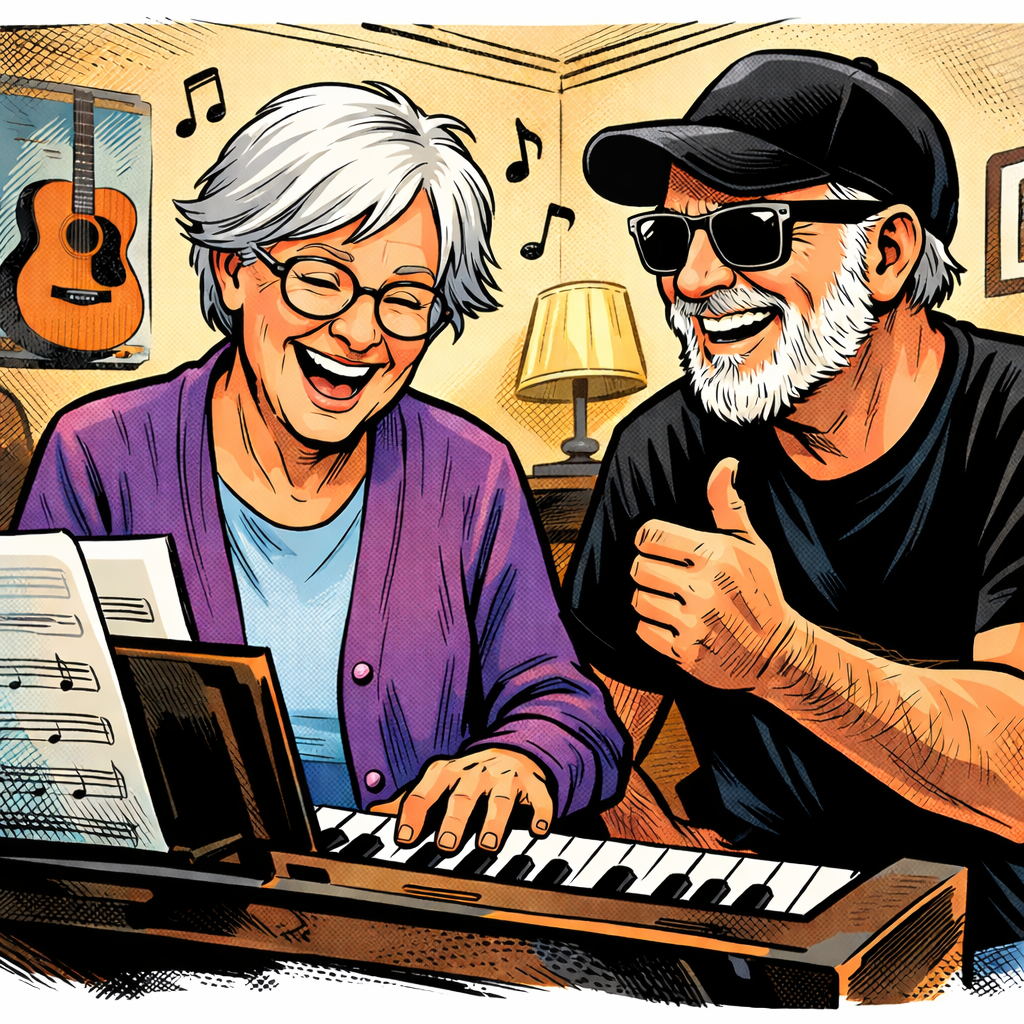
 Many people think learning piano means mastering complex classical pieces, reading dense sheet music, and practicing scales for months before they can actually play something enjoyable. But if your goal is simply to accompany your own singing voice, the path is much simpler—and much more rewarding right from the start.
Instead of focusing on intricate melodies or technical piano repertoire, you can concentrate on learning chords. Chords are the backbone of most popular music, and once you understand a small handful of them, you can accompany hundreds of songs. In fact, many classic songs from the 60s and 70s rely on just three or four basic chords.
This approach dramatically simplifies the learning process. Rather than reading note-by-note sheet music, you learn to recognize chord symbols like C, G, Am, and F. Your left hand can play simple bass notes while your right hand fills in the chord. The result is a full, supportive sound that perfectly complements your voice without requiring advanced piano technique.
Another advantage is how quickly you become musically engaged. When the goal is accompaniment, you can often start playing and singing simple songs within the first few lessons. That early success is motivating—it turns practice into something creative rather than mechanical. Instead of feeling like you’re “studying piano,” you’re actually making music.
Accompaniment also teaches skills that are incredibly useful for singers. You develop a better understanding of song structure, keys, and chord progressions. You become more independent as a performer because you don’t need a backing track or another musician to support you. With just a keyboard or piano, you can sit down and perform almost anywhere.
And perhaps most importantly, the piano becomes a musical partner rather than a technical obstacle. Simple chord patterns, gentle rhythms, and steady progressions create a supportive foundation for your voice. The focus stays on the song and the emotion you want to express.
If your goal is to sing, not become a concert pianist, this approach is liberating. Learn a few chords, keep the rhythm steady, and let the piano support your voice. Before long, you’ll discover that the instrument opens the door to a whole new level of musical freedom.