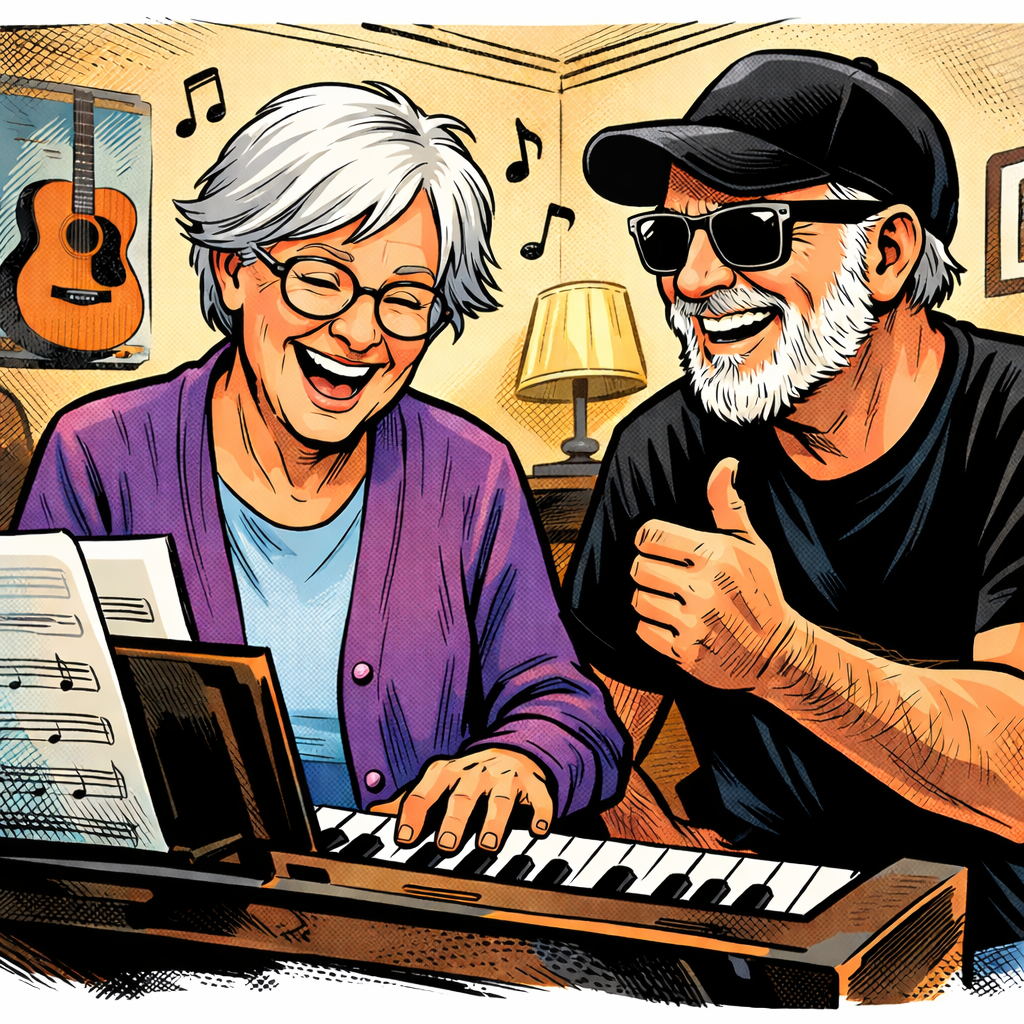
 Most people think of piano lessons like this: a kid hunched over a book, slogging through exercises that feel more like homework than music, reading notation long before they ever make a sound that actually sings. But that’s not how piano should be. The piano is about making music, not memorizing symbols.
These days, we’re lucky. With so much technology, you don’t have to wait to hear music in your head before you can play it. You can actually listen first — to recordings, to virtual keyboards, to MIDI files of the very pieces you want to learn — and let your ears guide your fingers. You get a sense of the melody, the rhythm, the feel, before worrying about the notation or tricky exercises.
And yes, AI can be a helpful companion in this process. It can play back a piece for you, slow it down, loop tricky sections, or even respond as you play so you can experiment safely. But it’s not about replacing you or replacing lessons. Choosing to sit down and learn how to play, to make music with your own hands, is about as human as it gets. AI just gives you a tool to explore, to hear, and to try things out — the real magic still comes from you deciding to play.
That doesn’t replace lessons — far from it. Think of it like this: you come to lessons already familiar with the sound in your head. You’ve got a rough idea of how it should feel, and that makes the time we spend together way more productive. Instead of stumbling through pages, we can focus on making it sound like music, shaping phrasing, touch, expression — the parts no app or website can ever really teach.
So yes, use the tools out there. Hear your method book played on YouTube. Slow it down. Loop the tricky spots. Play along. Let your ears learn what your hands will eventually do. Then, when you’re at the piano with someone guiding you, all that listening pays off. You’re not just learning notes — you’re learning music.
The point is, the piano can be joyful from the very start. You don’t have to slog through notation or drills to feel like a musician. Hear it. Play it. Enjoy it. And then, when you’re ready, we can fill in the technical stuff around the music you already love.